WP ChatGPT is a WordPress plugin that leverages the power of OpenAI’s GPT language model to generate high-quality content and act as a content writer. You can use it to generate written content for blog posts, online courses (on your LMS website), and eCommerce sites.
Video Tutorial
Watch the tutorial video below for a quick walkthrough of the add-on’s features and setup process.
For detailed instructions, please continue reading the full documentation. If you still have any questions, feel free to submit a support ticket.
Installation
Install the WP ChatGPT plugin & activate it.
Activate Your License Key
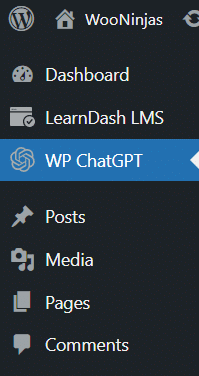
The license key can be configured from the License Settings tab, found on the “ChatGPT” menu. License keys are sent to your email address when you purchase the add-on.
Insert your license key in the field and then click on Activate.

General Settings
Here you can set general settings related to the addon.

Enable Activity Logs
Enable this option to generate activity logs related to the license activation. When this option is enabled, a new tab “Activity Logs” will become visible.

API Settings
Here you have to add the OpenAI API key and it can be found in the user settings of your OpenAI account.
After adding the API Key in the Field, click on the Save Changes button.

Usage
Follow the steps mentioned below to add descriptions or data to your post, course, or E-commerce Product:
- Create or edit the post/ course/ Product.
- Add the Gutenberg Classic Editor Block.
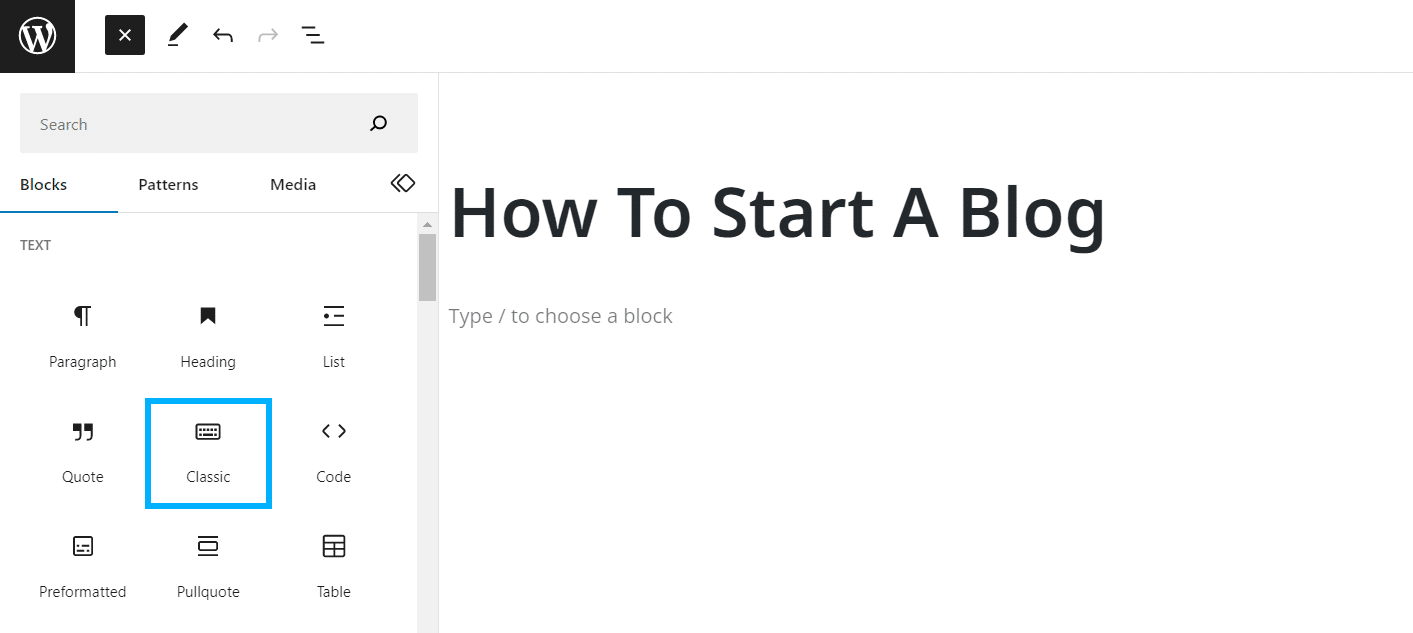
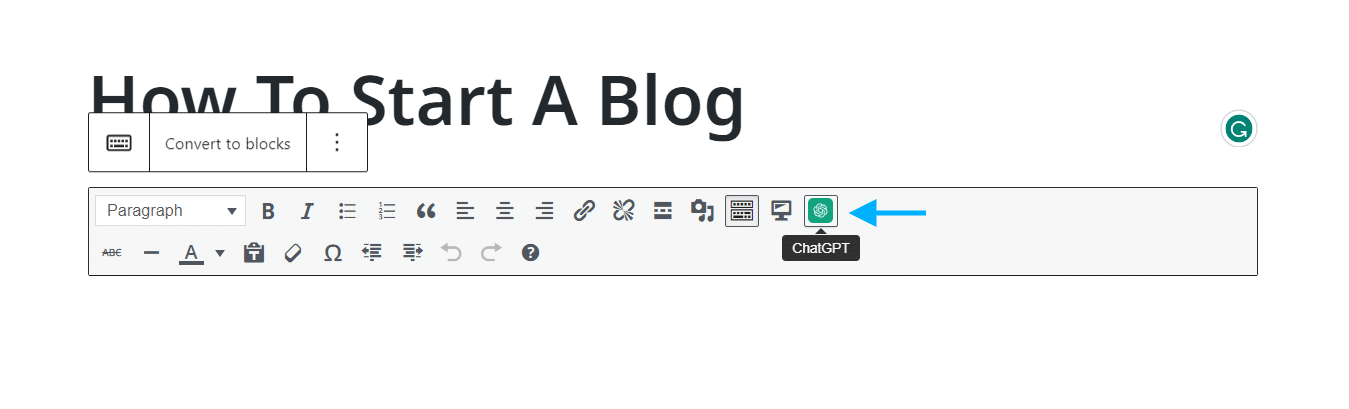
- After inserting Classic Block, click on the Chat GPT icon.
- This will open a popup that has many options available.

- Model:
This dropdown shows different models and the latest one is by default selected.
- Temperature:
Temperature is an important setting in GPT that has a significant impact on the output of the system. It controls the amount of randomness in the output and can be adjusted to achieve different results. Its value can be between 0 and 2. Higher values like 0.8 will make the output more random, while lower values like 0.2 will make it more focused and deterministic.
- Maximum Length:
Set the length of content that you want to be generated.
- Top P:
It is the distribution of the probability of common tokens. 1.0 means “use all tokens in the vocabulary” while 0.5 means “use only the 50% most common tokens”.
We generally recommend altering this variable or the Temperature variable but not both.
- Frequency Penalty:
If a word has already been used multiple times then the frequency penalty will lower the chances of that word being used again. The number should be between -2.0 and 2.0.
- Presence Penalty:
It does not consider how frequently a word has been used, but just if the word exists in the text. The number should be between -2.0 and 2.0.
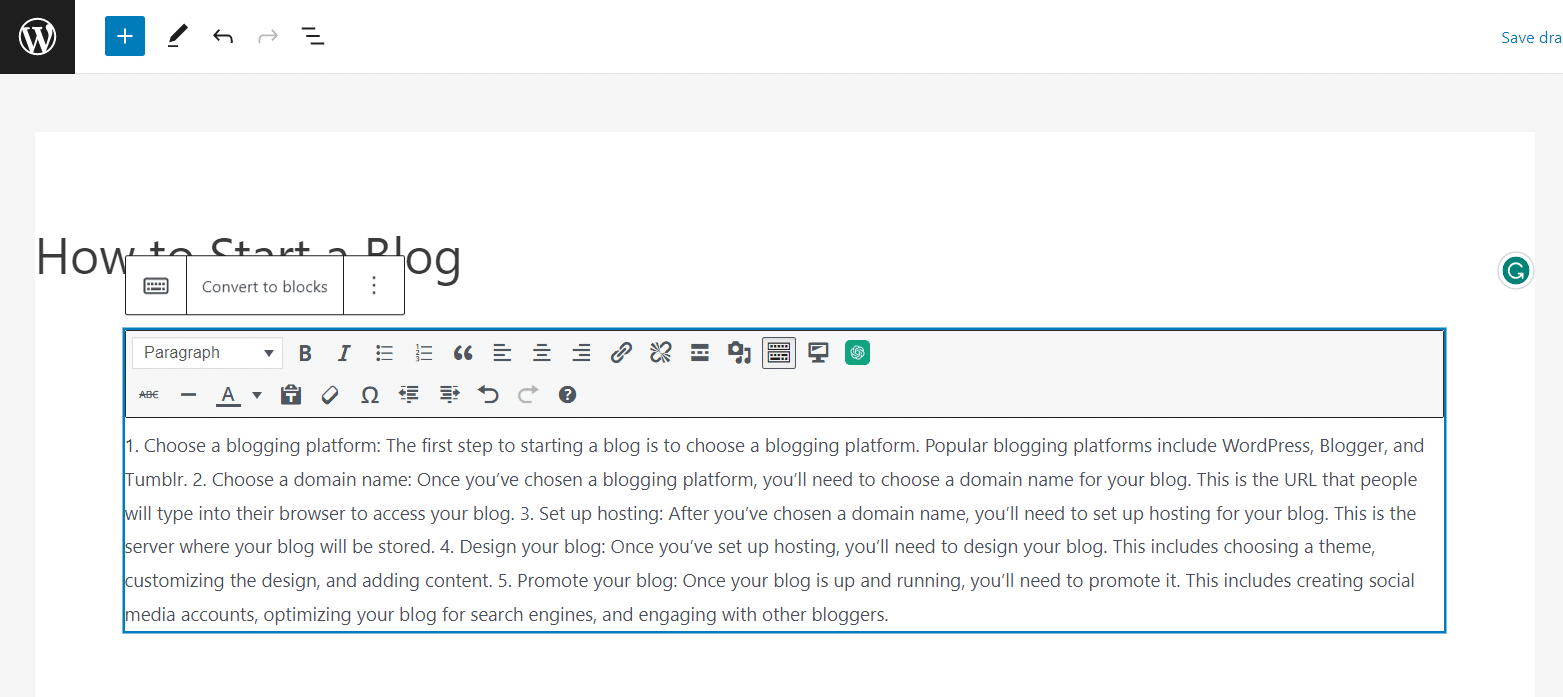
- Now add the Title of your content and click on Generate.

- This will generate your content and you can modify it according to your requirements.
FAQ
Does this plugin support Classic Editor?
Yes, along with Gutenberg Classic Block, it also supports Classic Editor.
Can we generate Images?
No, at this moment it only supports content creation.
Can I use it with LearnDash and WooCommerce?
Yes, you can use it with learning management systems and E-commerce plugins.
Changelogs
1.0.5
- Fix – Improved TinyMCE button registration, script dependencies, and cache invalidation.
- Fix – Restored the editor selection before inserting generated content, preserved paragraph formatting, and synchronized changes for saving.
- Fix – Improved content insertion in the Classic Editor Text/HTML tab.
- Fix – Prevented duplicate prompt dialogs and click handlers, rejected whitespace-only prompts, and preserved zero-valued generation parameters.
- Fix – Trimmed API keys, displayed API error details, and restored the Generate button after API key retrieval failures.
1.0.4
- Fix: Resolved security vulnerabilities and enhanced overall performance.
1.0.3
- Fix: Improved Licensing Module.
1.0.2
- Fix – Addressed security recommendations in accordance with WordPress coding standards.
- Fix – Resolved performance-related issues identified by PHPCS.
- Fix – Fixed an issue where the modal for entering LLM prompt instructions was not opening.
- Fix – Fixed an issue where content returned from GPT was not being saved in the widget text editor.
1.0.1
- Update – Removed legacy OpenAI models and added GPT-4o, GPT-4 Turbo, GPT-4, and GPT-3.5 Turbo.
1.0.0
- Initial Release.